Breakfast Food Patch Embroidery Set
As a designer who spends half my life troubleshooting tension issues and the other half obsessing over color palettes, I don’t just look at an embroidery file; I look at its potential. When Breakfast Food Patch Embroidery Set landed on my desk, my first thought wasn’t about the cute avocado or the cheerful fried egg—it was about placement, stitch density, and whether this design would hold up in a real-world commercial application. We are all looking for that sweet spot where whimsy meets wearability, especially when creating products for Etsy shops, boutique brands, or personalized gifts.
The First Impression: Mood and Visual Personality
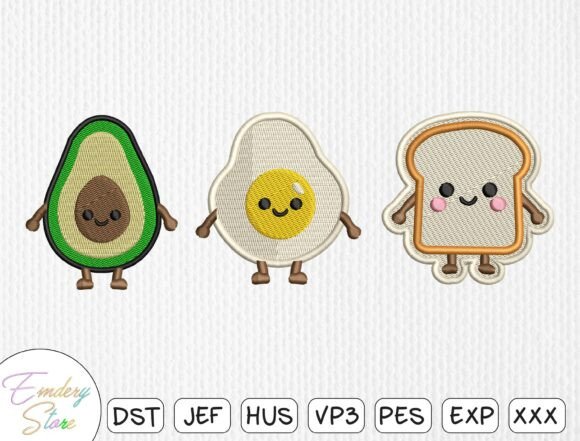
The moment you open the file, the kawaii-style aesthetic is undeniable. The collection features three distinct breakfast items, starting with a happy avocado and moving to a cheerful fried egg. There is an inherent warmth to this theme. In the world of Food Dining and lifestyle branding, comfort food imagery triggers a specific emotional response: nostalgia, comfort, and joy. This isn’t just a graphic; it’s a mood board come to thread.
From a design perspective, the layout feels balanced. The shapes are rounded and approachable, which translates beautifully to embroidery because soft curves generally render better than sharp, jagged edges in smaller hoop sizes. The visual personality is playful but not childish. This is crucial for us as creators targeting adult consumers—think millennials buying aprons for their kitchens or young adults decorating their dorm rooms. The design strikes a balance between "cute" and "trendy," making it versatile enough for various demographics without feeling like it belongs exclusively in a nursery.
Real-World Application: Where Does This Fit?
I recently had a scenario in mind while testing this machine embroidery design: a custom embroidered tote bag for a local coffee shop collaboration. The client wanted something that screamed "morning routine" without being cliché. This set fit perfectly. Imagine the avocado patch centered on a heavy canvas tote, paired with simple, clean lettering. Or perhaps the fried egg motif placed off-center on a sweatshirt, creating a casual, streetwear vibe.
Here is how this design performs across different product categories:
- Custom Apparel: On t-shirts and hoodies, the bright colors pop against neutral backgrounds. It works exceptionally well as a chest pocket detail or a back print for a relaxed fit.
- Kitchen Textiles: As an embroidered patch on tea towels or oven mitts, the theme aligns naturally with the function of the item. The durability required for kitchen use means we need to pay attention to stitch density here.
- Baby Items: For baby embroidery, the softness of the shapes is ideal. A onesie with a tiny avocado is undeniably adorable, but remember that baby skin is sensitive, so finished edges must be smooth.
- Holiday Gifts: This fits seamlessly into holiday embroidery collections. While not explicitly Christmas-themed, the cozy breakfast vibe makes it perfect for winter gift baskets or morning-after-brunch presents.
Technical Performance and Stitch Clarity
When evaluating any embroidery file, clarity is king. The satiny stitches used for the outlines of the avocado and egg appear clean, which helps define the character’s expression. However, the fill stitch areas need careful consideration. If the fill is too dense, the fabric can pucker, especially on lightweight cottons. If it’s too sparse, the stabilizer might show through, ruining the professional finish.
I recommend checking the stitch density closely before running a production batch. For a small business merchandise run, consistency is key. You want every single tote bag or apron to look identical. Test the design on your actual production fabric, not just scrap pieces. Different fabrics react differently to thread tension. A textured fabric like linen might hide minor imperfections, whereas a smooth sateen will reveal every skipped stitch.
Also, consider the thread colors. The contrast between the yellow yolk and the white egg white needs to be sharp. If your thread selection is muted, the design loses its impact. Use high-quality polyester threads to ensure the colors remain vibrant after multiple washes. This is particularly important for commercial embroidery projects where customer satisfaction hinges on longevity.
Where to Be Cautious
No design is perfect for every surface. Here are a few scenarios where you should exercise caution with this set:
- Small Hoop Sizes: If you attempt to digitize or embroider these designs in very small hoops (under 4 inches), you risk losing the detail in the facial expressions of the characters. Keep the size proportional.
- Stretchy Fabrics: Knits can distort under the pressure of the needle. Always use a tear-away or cut-away stabilizer depending on the stretch level of the garment.
- Dense Stitch Areas: Avoid placing this design over seams, zippers, or existing thick embroidery. The added bulk can make the garment uncomfortable to wear.
- Curved Surfaces: While great for flat panels, applying this to a curved cap front requires precise hooping techniques to prevent distortion.
Impact on Product Value and Branding
In the digital age, presentation matters. A well-executed digital embroidery file can elevate a basic commodity into a premium handmade product. When customers see high-quality stitching on a tote bag design or a sweatshirt embroidery, they perceive higher value. They trust that the maker paid attention to detail.
This design enhances brand consistency if your brand leans towards lifestyle, home goods, or food-related content. It adds a touch of personality to printable mockups and design assets you might sell online. For an Etsy seller, using trending themes like breakfast foods can drive organic traffic. People search for "cute kitchen embroidery" or "avocado gift ideas." By offering this as part of a cohesive collection, you increase the likelihood of cross-selling.
Furthermore, the personalized gift aspect cannot be overstated. Adding a name or date next to this design transforms it from a generic item into a cherished keepsake. Whether it’s a wedding gift for a newlywed couple who loves cooking or a birthday present for a foodie, the emotional connection strengthens the buyer’s engagement with your brand.
Practical Designer Notes for Success
Before you commit to a full production run, follow these practical steps to ensure your embroidery project is a success:
- Test on Scrap Fabric: Never skip this step. Check how the stabilizer interacts with your specific fabric weight.
- Check Contrast: Hold your thread spools up to the design. Ensure the thread colors provide enough contrast against the fabric background.
- Review Small Details: Zoom in on the digital preview. Are the eyes clear? Is the toast shape recognizable? If details are lost at screen resolution, they will likely be lost in stitching.
- Black and White Mockup: View your design in grayscale. This helps identify if the design has good tonal variation or if certain elements blend together.
- Confirm Licensing: If you plan to sell finished items, verify the license terms of the digital product seller source. Some files are for personal use only, while others allow commercial sales. Clear this up early to avoid legal headaches.
Ultimately, Breakfast Food Patch Embroidery Set is more than just a cute pattern; it’s a tool for creating joyful, marketable products. It bridges the gap between hobbyist passion and professional execution. By understanding its strengths and limitations, you can confidently incorporate it into your craft business offerings, knowing it will resonate with customers who appreciate the little things in life—like a perfectly stitched avocado.